Crafting the Slime Trail
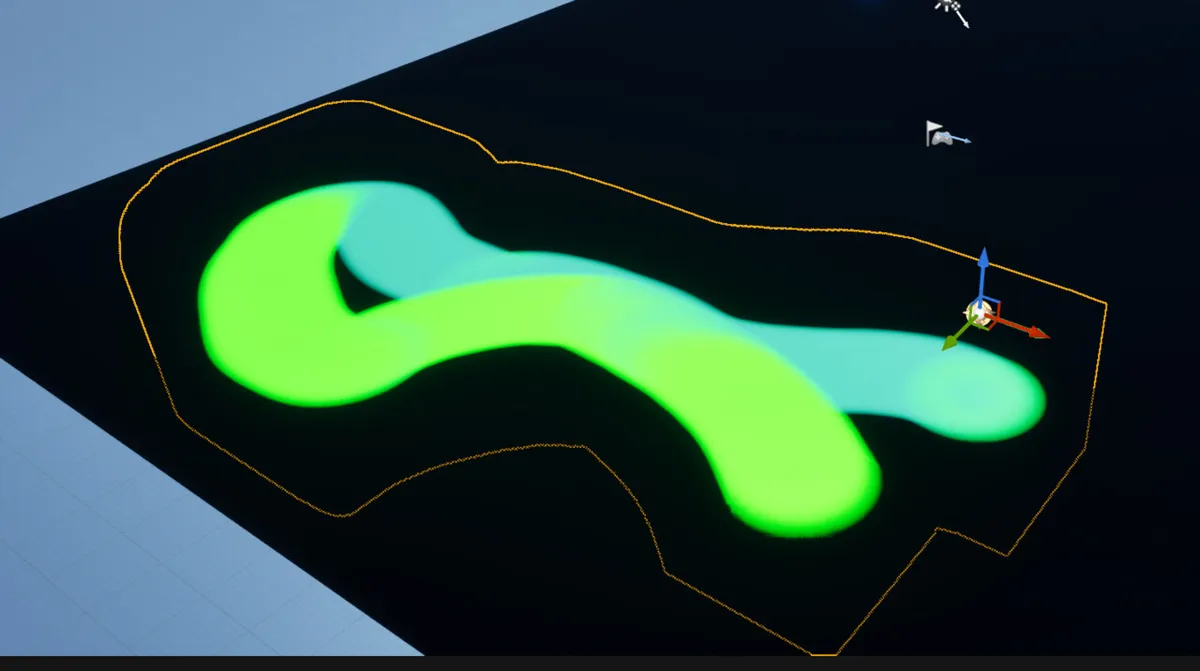
Once the base shader was in, I started exploring how the slime leaves a mark as it moves. Still experimental — here's what I've tried and where I'm landing.
Approach 1 — Decals + Niagara
Niagara spawns trail particles, each becoming a Deferred Decal via the Mesh Decal Renderer.
Quick to prototype and blends well with detailed masks, easy to art-direct. The downsides are overlap causing overdraw if you're not careful with density, stretching on steep or complex geometry, and needing tight lifetime/culling — distance caps, max active decal limits, and soft fades to keep it clean.
Approach 2 — Render Targets (paint into a texture)
Stamp particle hits into a TextureRenderTarget2D via Blueprint using Draw Material to Render Target, then sample that mask in the ground material.
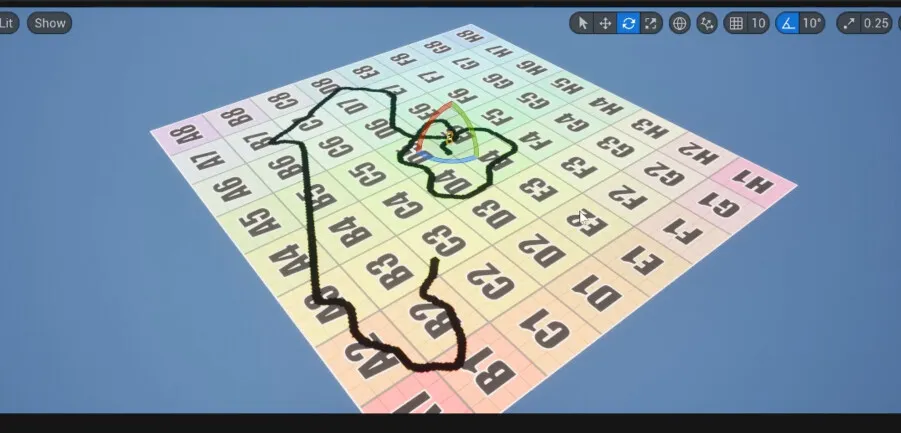
Really nice for persistent, painterly paths — supports blur, erosion, drying history. Shines in contained spaces like rooms, caves, arenas. Gets tricky at scale though: one RT over a large landscape blurs fast unless resolution is huge, frequent writes add cost, and big open worlds usually need tiled RTs with proper streaming management.
Approach 3 — RVT + Niagara-Driven HISM Stamps (experimental)
Niagara exports positions → Blueprint adds HISM stamp meshes → each stamp writes a soft mask into an RVT via Runtime Virtual Texture Output → landscape and meshes sample that RVT for the trail effect.
How it works:
- Niagara → Blueprint: send Position / Radius / Alpha
- HISM stamps: add/update instances at those positions
- Write: stamp material writes a SphereMask into the RVT inside a bounded RVT Volume
- Read: landscape/props sample the RVT to reveal trail tint, roughness, and normal tweaks
World-aligned, slope-friendly, reads are cheap and stream nicely, and HISMs batch better than piles of individual decals. Single unified look across anything sampling the RVT.
Note
- RVTs aren't designed for high-frequency per-frame dynamic updates over large areas.
- This was an experiment — the stamp shape and spacing matter a lot or trails look dotted, and you need a clear update policy (write every N frames or after distance thresholds). Interesting approach but not free.
Where I'm Leaning (right now)
Decals for general open-world trails with smart culling and lifetimes. RT painting for smaller contained spaces that benefit from paint history.
more updates as v1 develops. ✦